
You are not wrong to want more for your child
Raise a Dragon Slayer.
More and more parents are realizing the old model is not built for the kind of future their children are growing into. Get our free Info Kit and see how Chisholm Creek Academy helps learners grow in curiosity, character, and responsibility.
A different kind of school for families raising Dragon Slayers.
Maybe you already feel it.
Maybe you have felt it for a while now, even if you have had a hard time putting words to it. Your child is bright, curious, full of questions, and alive with energy, but the usual school path can feel too small for who they will become. What should be feeding their love of learning can start to flatten it. What should be building confidence can start to train passivity. What should be preparing them for life can begin to feel like practice in compliance.
You may be noticing that your child does not need more pressure, more noise, or more box-checking. They need challenge with meaning. They need room to think, explore, create, and grow. They need adults who believe they are capable of more than simply following directions and staying inside the lines.
You may also be noticing something in yourself. A growing sense that the familiar path is not necessarily the right one. A quiet suspicion that there has to be something better than a system built to keep children moving in neat lines while their curiosity slowly fades. A hope that school could do more than prepare a child to perform. That it could help shape character, courage, responsibility, and a real love of learning.
If that sounds familiar, you are not alone. Many of the families who find us started in exactly that place. They were not looking for something trendy or reckless. They were looking for a place where their child could grow strong, thoughtful, and fully alive. A place that could help raise not just good students, but Dragon Slayers.
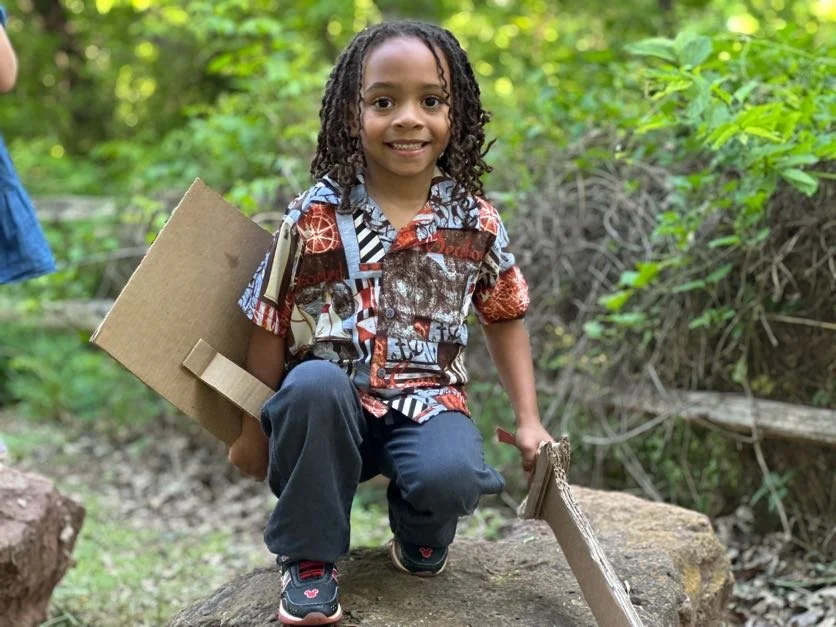
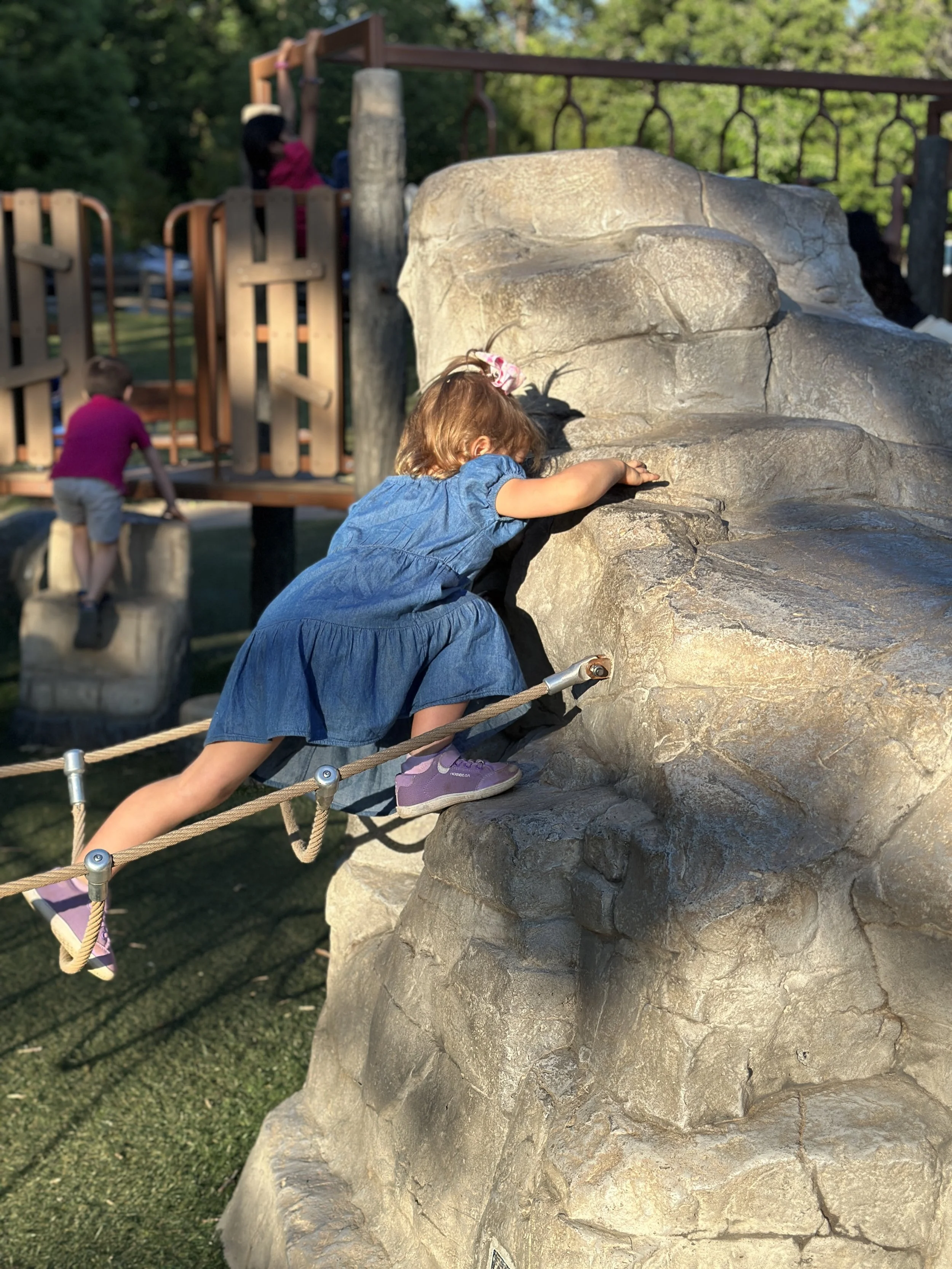
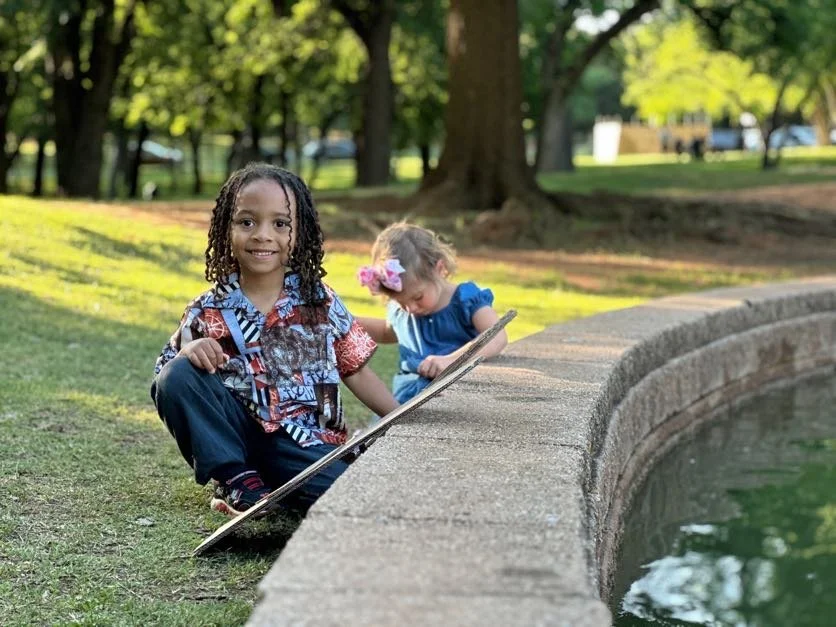
Check out these Blogs & See if you too are Raising Dragon Slayers
Why We're Raising Dragon Slayers
(and Why You Might Be Too)The Book That Took Us to the Edge of the Map
Let Them Hear of Brave Knights
When Curiosity Isn’t the Problem
Our Hero’s Journey (a parent’s perspective)
What Makes Us Different
Most schools are built to keep children moving in neat lines: stay on pace, follow directions, memorize the right answers, and do well enough to move on to the next box. For some children, that works well enough. But for many families, especially the ones asking deeper questions, it starts to feel like something important is missing.
Because you are not just raising a student. You are raising a future husband or wife, a business owner, a parent, a leader, a neighbor, a problem solver. One day, your child will have to make hard decisions without a teacher standing nearby holding the answer key. You are raising a Dragon Slayer.
That requires more than academics alone. It requires courage, judgment, responsibility, curiosity, resilience, and the ability to think clearly, work hard, recover from failure, and keep moving when life gets difficult. We believe school should help children become capable human beings, not just successful test takers.
At Chisholm Creek Academy, learners are trusted with real responsibility. Instead of adults managing every detail, children learn to set goals, manage their time, solve problems, and take ownership of both success and failure. Traditional schools often produce strong rule followers, but life demands strong decision makers. We would rather help learners build that muscle now.
We also believe children rise when the work matters. Our learners engage in meaningful projects, real challenges, and work that asks something of them. They present ideas, defend opinions, build solutions, and wrestle with problems that do not have easy answers. They learn that effort matters, failure is not fatal, and excellence is earned. Dragon Slayers are not raised through busywork or participation trophies. They are forged through meaningful challenge.
Character matters just as much as academics, and maybe more. We care deeply about how learners treat others, whether they keep their word, how they handle responsibility, and what they do when things get hard. Kindness, integrity, courage, and humility are not side lessons. They are the work. The goal is not simply a smart child. The goal is a good human.
We believe education works best inside strong community. Our school is intentionally small, relational, and deeply connected. Families know each other. Learners know they belong. Parents are partners, not spectators sitting quietly on the sidelines. This is not a drop-off service. It is a tribe. And when you are raising Dragon Slayers, tribe matters.
We are also far less interested in asking, “Did they finish?” and far more interested in asking, “Did they grow?” Grades can create the illusion of learning without the reality of it. We focus on mastery, reflection, and real progress. Learners build portfolios, earn badges, present exhibitions, and learn to measure themselves against excellence, not just completion. Life does not reward people for checking boxes. It rewards people who can actually do hard things.
Our Guides are not here to perform learning for children. They are here to challenge, question, and hold up a mirror. We use the Socratic method because learners grow stronger when they wrestle with ideas instead of being handed conclusions. Sometimes that is uncomfortable. Good. Growth usually is.
We are not trying to raise children who wait to be told what to think. We are helping raise young people who can stand in the world, face dragons, and think for themselves. That is the difference.
Frequent Concerns we hear
And our responces
-
That is one of the most common concerns we hear, and honestly, it is a fair one. Most children have spent years being managed, so independence does not appear overnight. We do not simply hand them freedom and hope for the best. We build it carefully through structure, accountability, clear expectations, and real consequences so they learn how to choose what matters, even when it is hard.
-
That is one of the first questions thoughtful parents ask, because rigor matters, and we agree. Too often, traditional school teaches learners to aim for the minimum standard that still earns the grade they want. Even high-achieving students chasing an A+ are often learning how to do the bare minimum of what they personally find acceptable to protect that result, rather than stretching toward real excellence.
We see rigor differently. Real rigor is not more worksheets, longer homework, or more hours sitting still. It is learning to think critically, communicate clearly, solve problems, manage time, and take ownership of your work. We ask learners to measure themselves against mastery and excellence, not just completion. Is this the best you can do? Is it better than last time? Could it stand next to the work of a master? That kind of standard pulls far more out of a child than simply asking, “Did you turn it in?”
-
At first glance, it can sound like chaos. Freedom in school makes a lot of parents picture children running wild, avoiding hard work, and doing only what feels easy. That would be chaos, and that is not what we are building.
Freedom here is paired with responsibility, accountability, and real consequences. Learners are trusted with meaningful choices, but they are also expected to meet clear standards, keep commitments, contribute to the studio, and face the results of their decisions. We are not removing structure, we are shifting ownership.
Traditional schools often rely on adults to control behavior from the outside. We are trying to help learners build discipline from the inside. That process can look messier at times because real growth usually does, but the goal is far stronger. We are not raising children who behave well only when someone is watching. We are helping raise young people who can govern themselves, make wise choices, and carry real responsibility when no one is standing over them.
-
That fear sits underneath almost every school decision a parent makes, because no one wants to gamble with their child’s future. When parents ask if their child will fall behind, what they are are usually really asking is, “Will my child be prepared for life, opportunity, and the future waiting for them?”
The harder question is: behind whom, and behind what? Behind a grade level chart? Behind a testing benchmark? Behind a child who can memorize well and perform on command? Traditional school often measures progress by pace and comparison, but speed is not the same thing as mastery.
We care far more about whether a learner truly understands, can apply what they know, and is growing in confidence and capability. A child who moves quickly through material they do not actually own is not ahead. They are just moving faster through the checklist.
At Chisholm Creek Academy, learners work toward mastery, not box-checking. That means sometimes they move faster, sometimes slower, but the goal is real understanding and lasting growth. We would rather a child take the time to build strong foundations than rush forward carrying quiet gaps that get bigger every year.
We are not interested in helping learners keep up with an artificial race. We are helping them become the kind of person who can keep learning, adapting, and thriving for life. In the long run, that is not falling behind. That is getting ahead where it actually matters.
-
That is a fair question, because most of us were trained to believe that grades are proof of learning. A report card feels clean and simple. The problem is that grades often measure compliance, speed, and short-term performance more than deep understanding. A child can earn an A and still forget everything a week later.
We want parents to see something more real than a number on a paper. Instead of asking, “What grade did they get?” we ask, “Can they actually do it?” Can they explain it, apply it, defend it, teach it, and use it in the real world?
Our learners build portfolios, complete exhibitions, earn badges, present their work, and reflect on their own growth. Parents do not just receive a grade report. They see the evidence. They hear their learner explain what they have learned, where they struggled, and what they are working toward next.
Mastery is much harder to fake than a good grade. It requires ownership, reflection, and real competence. We are not trying to help learners look successful on paper. We are helping them become capable in life.
-
That is a wise concern, because many children do need more structure, not less. The mistake is assuming that freedom and structure are opposites. In reality, the best freedom is built on strong structure.
At Chisholm Creek Academy, we do not remove structure. We change where it lives. There are clear routines, expectations, boundaries, and responsibilities woven throughout the day. Learners know what is expected of them, how the studio runs, and what happens when they fall short. The difference is that the goal is not lifelong dependence on adult control, but gradually learning to carry that structure for themselves.
Some children arrive needing a great deal of external support, and that is normal. We meet them there. Freedom is earned through trust, habits, and responsibility, not handed out all at once. Over time, the goal is for learners to move from needing constant management to becoming young people who can manage themselves.
We are not trying to create a loose environment where children drift. We are building disciplined independence. Strong roots first, then strong wings.
-
Tuition is a real commitment, and we respect that. Choosing a school is one of the biggest investments a family makes, and parents are not just asking about dollars, they are asking whether this is truly worth the sacrifice, planning, and trust it requires.
We believe the better question is not simply, “Is tuition expensive?” but “What kind of return am I hoping for?” If the goal is raising a child with confidence, character, independence, resilience, and a genuine love of learning, that investment reaches far beyond one school year.
For many Oklahoma families, the Oklahoma Parental Choice Tax Credit can significantly reduce the actual cost of tuition, making private education far more accessible than they expect. We also provide a tuition payment estimator so families can clearly see what their monthly investment may look like and plan with confidence.
We are not selling convenience or prestige. We are helping families invest in the kind of person their child is becoming. For many parents, the greater cost would be watching their child lose their spark and accepting that as normal.